Language barriers are a well-studied problem in communication and linguistics research, linked to reduced comprehension, slower decision-making, and increased stress in cross-language interactions such as medical visits, travel, and business negotiations. Real-time translation earbuds like Talky AI Buds are one attempt to reduce the friction of these interactions by removing the need to pass a phone screen back and forth.
What actually happens when two people don't share a language?
Cross-language communication research describes language barriers as more than a vocabulary gap — they also involve differences in tone, idiom, and nonverbal cues that get lost without a shared frame of reference. Studies on intercultural communication note that even accurate word-for-word translation can miss context that native speakers pick up automatically, which is why fluent, context-aware output — the goal of the neural machine translation covered in our NMT deep-dive — matters more than literal translation.
Why do language barriers affect fields like healthcare and travel so heavily?
Documented research on language-concordant care shows that patients who share a language with their provider report better understanding of instructions and higher satisfaction, which is part of why interpretation tools are widely used in clinical settings. Similarly, everyday travel interactions — ordering food, asking directions, hotel check-in — are exactly the short, transactional exchanges that a hands-free device like Talky AI Buds is designed to support, per the benefits outlined on the main Talky AI Buds page.
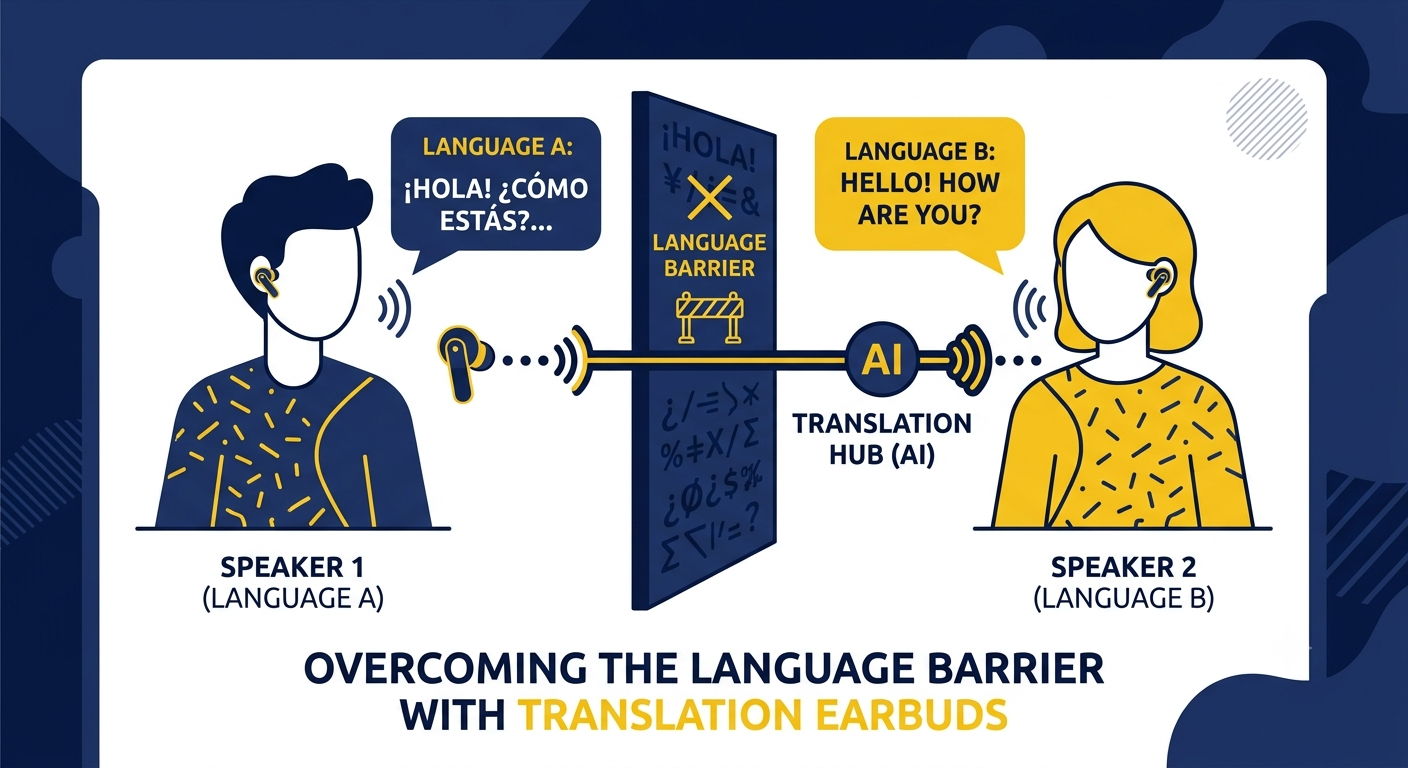
How does device-based translation compare to human interpretation?
Professional human interpreters remain the gold standard for legal, medical, and high-stakes diplomatic settings because they can navigate ambiguity, tone, and cultural nuance in ways current AI systems cannot fully replicate. Device-based translation, including tools like Talky AI Buds, is better understood as a practical aid for everyday, lower-stakes conversation rather than a replacement for certified interpretation in formal or legal contexts.
What communication factors still limit AI translation tools?
Communication research consistently flags idiom, sarcasm, regional dialect, and overlapping speech (multiple people talking at once) as persistent challenges for any AI-mediated translation, independent of which specific device is used. Setting realistic expectations around these limits — rather than assuming perfect, nuance-free translation — leads to a better real-world experience with any translation earbud, Talky AI Buds included.
A note on scope
This article summarizes general, well-documented findings from communication and linguistics research. It is not a clinical or academic study of Talky AI Buds itself, and no product-specific research trial is implied.